If you are staring through the windshield of a 2026 model year vehicle and seeing a double image of your speed or navigation—a phenomenon we call ‘ghosting’—you aren’t seeing things. You are witnessing a failure of optical physics in your automotive glazing. As a Master Glazier with over a quarter-century of experience in managing how light and heat move through glass, I have seen this issue migrate from high-end architectural curtain walls to the dashboard of your daily driver. A window is not just a piece of silica; it is a complex laminate system designed to manage refractive indices, and when that system fails, your safety is compromised.
The Ghosting Crisis: An Installation Autopsy
I recently had a driver pull into the shop with a luxury SUV they had just ‘repaired’ at a cut-rate glass outlet. They were complaining about a persistent blur in their Heads-Up Display (HUD). I didn’t even need to sit in the driver’s seat. I walked up with my digital thickness gauge and a polarizing filter. The homeowner—or in this case, the car owner—was told they were getting OEM-equivalent glass. I showed them the truth: the humidity and heat of our local climate had already begun to stress a sub-par PVB interlayer that lacked the necessary wedge profile. It wasn’t a software glitch; it was a physical failure of the glass to align the light paths. This is the ‘caulk-and-walk’ equivalent of the auto world, where installers slap in a piece of glass without understanding the Rough Opening tolerances of the modern A-pillar or the specific requirements of the ADAS (Advanced Driver Assistance Systems).
“Installation is just as critical as the window performance itself. A high-performance window installed poorly will fail.” – AAMA Installation Masters Guide
In the world of 2026 automotive tech, we must treat the windshield like a precision lens. When you come in for a car service, you might expect an oil change or brake service, but if your shop isn’t talking about the refractive index of your glass, they are missing the most critical safety component in your line of sight. Engine repair keeps the car moving, but proper glazing keeps you on the road.
The Physics of the Tapered Interlayer
Why does a HUD ghost? To understand this, we have to perform some ‘Glazing Zooming.’ Standard automotive glass consists of two layers of glass with a Polyvinyl Butyral (PVB) interlayer. In a standard windshield, these layers are parallel. However, a HUD projects light onto the inner surface of the glass. Some of that light reflects off the inner surface (Surface #4 in glazier terms, counting from the outside in), and some of it travels through to Surface #1 and reflects back. Because the glass has thickness, these two reflections are physically offset. In the technical realm, we solve this by using a ‘wedge’ or tapered PVB interlayer. This wedge shape angles the two surfaces of the glass so that the reflections from the inner and outer surfaces overlap perfectly at the driver’s eye level.
If the wedge angle is off by even a fraction of a degree, or if the Glazing Bead or molding creates uneven pressure on the laminate, you get a ghost image. At clearautoglasss, we analyze the specific ‘Dew Point’ and thermal expansion coefficients of the frame to ensure the glass sits perfectly neutral. In a hot climate, the Solar Heat Gain (SHGC) is your primary enemy. Intense infrared radiation can cause the laminate layers to expand at different rates, distorting that precision wedge. This is why we specify Low-E coatings on Surface #2 to reflect that radiant heat back into the atmosphere before it can destabilize the interlayer. A lower SHGC isn’t just about keeping the cabin cool; it is about maintaining the structural and optical integrity of your HUD.
Beyond the Oil Change: Why Precision Matters
Many drivers treat a windshield replacement like a commodity. They think it’s no different than getting an oil change or a routine brake service. But engine repair involves mechanical tolerances measured in millimeters; glazing involves optical tolerances measured in microns. When we perform a car service at clearautoglasss, we aren’t just ‘swapping glass.’ We are recalibrating the vehicle’s relationship with light.
“The installation of a fenestration product into a rough opening is a critical influence on the service life and performance of that product.” – ASTM E2112 Standard Practice
Consider the Sill Pan concept in residential glazing—it is designed to manage water that inevitably gets past the primary seal. In a car, your cowl and Sash area must function the same way. If an installer fails to manage the Weep Hole logic of the vehicle’s frame, or if they Shim the glass incorrectly, they introduce stress. This stress can lead to ‘birefringence’—a phenomenon where the internal stress in the glass actually changes the way light bends through it, further ruining your HUD clarity. We often see this when ‘Tin Man’ style installers use high-pressure tools to force a fit rather than ensuring the Rough Opening is clean and the adhesive bead is uniform.
Managing the Thermal Logic
In our region, the heat is relentless. This means we must focus on the glass performance on Surface #2. If you use a cheap replacement, the glass absorbs that solar energy. The temperature of the laminate can soar, leading to a breakdown of the adhesive bond and a shift in the PVB’s optical properties. You want to block the sun’s heat, not just the air temperature. This is where clearautoglasss excels. We provide glass that acts as a thermal barrier, ensuring that even on a 100-degree day, your HUD remains crisp because the internal wedge hasn’t been warped by excessive thermal gain.
We also have to consider the ‘Operable’ components. Your wipers, sensors, and cameras all interact with this glass. An incorrect installation can lead to ‘camera blindness’ where the ADAS system cannot see through the glass clearly due to distortion in the ‘frit’ zone. This isn’t just a nuisance; it’s a failure of the safety system. Don’t buy the marketing hype of ‘same-day service’ that ignores these technical realities. Buy the numbers—check the U-Factor, check the SHGC, and most importantly, check the experience of the glazier holding the suction lifter.
Related Posts

Does Your 2026 Auto Glass Replacement Pass This HUD Clarity Test?
The Ghost in the Glass: Why Your HUD Clarity Depends…
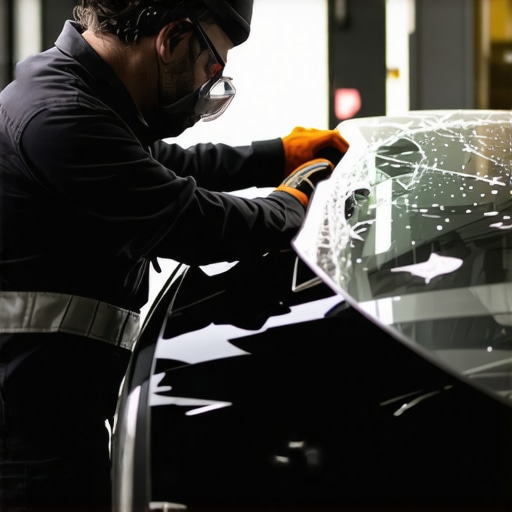
Auto Glass Replacement & Repair: Top Strategies for Safer Roads in 2024
Last summer, I was cruising down the road when a…
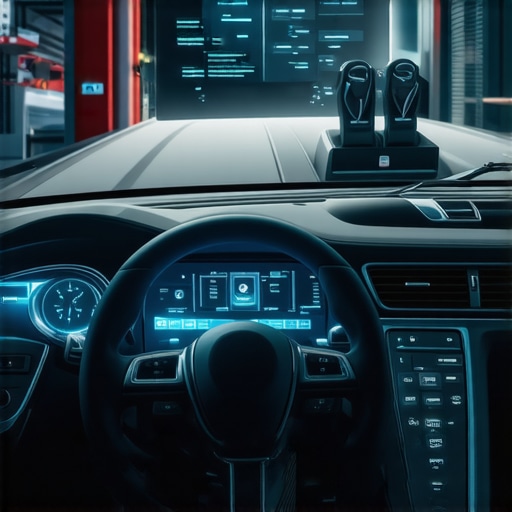
3 Reasons Clearautoglasss Tech Prevents 2026 HUD Ghosting
When you have spent twenty-five years in the glazing industry,…